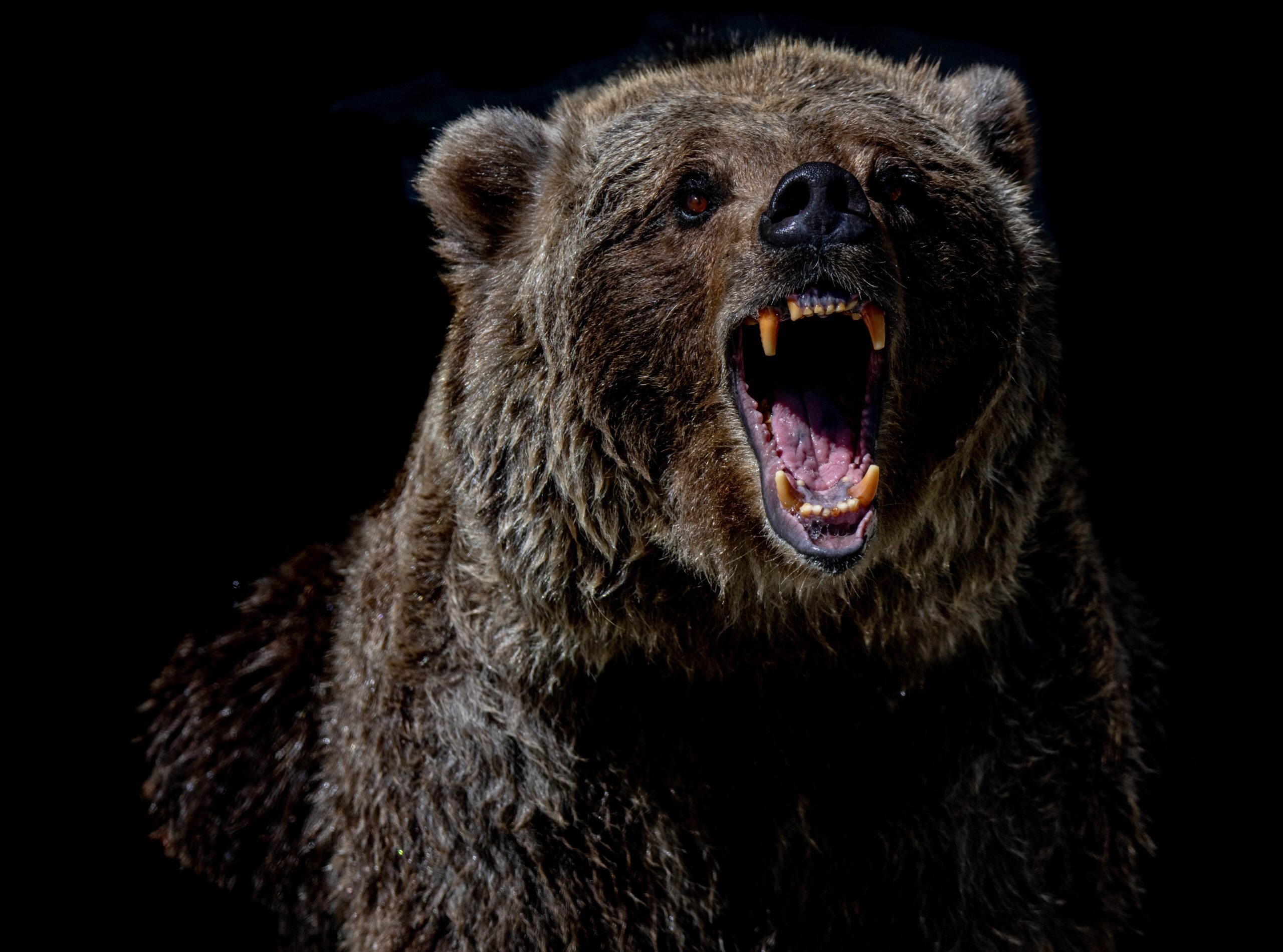

A villager rounds a bend in the trail and locks eyes with a bear.
Nobody has to teach him what happens next. His body already knows.
That same wiring is still running the show today, whether the threat is an actual animal or a moment that’s tipped over into real crisis. TIPP is four tools built specifically for that tipping point. DBT calls this distress tolerance, the skill set for when an emotion has gotten too big to think your way through, and the body has to come down first before the mind can follow. Temperature. Intense Exercise. Paced Breathing. Progressive Muscle Relaxation. Four tools, and every one of them works the same direction, changing the mind by working on the body first.
What’s Actually Happening in the Brain
The moment the villager’s eyes land on the bear, his amygdala fires. That single signal kicks off the fight-or-flight response, and the body answers it by flooding itself with adrenaline and cortisol. His heart rate spikes. Blood pulls away from the parts of his brain built for careful reasoning and pours into the muscles built for running. He isn’t thinking anymore. He’s reacting.
This is the same sequence at work when a boardroom disagreement or a fight with someone you love sends your pulse climbing. The threat looks nothing like a bear. The body can’t tell the difference.
The villager decides, correctly, that he can’t win a fight with a bear, and he runs.
Temperature: The Cold Catalyst
He runs hard enough, long enough, that he stumbles into an icy river.
The sudden cold triggers something called the mammalian dive reflex, an old survival mechanism managed by the parasympathetic nervous system. It releases a neurotransmitter called acetylcholine, which tells the vagus nerve to slow the heart down. In the middle of the coldest, most chaotic moment of his escape, his mind finds an unexpected clarity.
That’s Temperature, the first TIPP skill, and it’s the fastest one to feel working.
Try this: A cold shower, starting warm and turning it colder, or an ice pack held against your cheeks and the skin around your eyes, can trigger the same reflex. Fifteen to thirty seconds is often enough. Adding a short breath hold, twenty to thirty seconds, deepens the effect, since the brain reads the combination as something closer to drowning and responds accordingly. Two or three rounds is usually plenty. One honest caveat, skip this one if you have a cardiac condition, and check with your doctor first if you’re unsure.
You likely won’t feel instantly fine. The adrenaline and cortisol already in your system take twenty to sixty minutes to fully metabolize, and you may still feel shaky or drained during that window. What changes immediately is your access to clear thought, which is the actual goal.
Intense Exercise: The Elixir of Endorphins
Out of the river now, still running on adrenaline, the villager keeps moving hard, putting real distance between himself and the clearing.
Sustained, intense movement burns through the stress chemicals still circulating in his system, and his brain answers with endorphins, the body’s own natural painkillers. Fear eases. Endurance holds a little longer. A strange, useful clarity returns right when he needs it most, and he spots a cave up ahead.
That’s Intense Exercise, the second TIPP skill.
Try this: Twenty to thirty minutes of real cardio, a hard run, a brisk aggressive walk, a short HIIT session, gets you there. If twenty minutes isn’t available, even a few minutes of genuinely intense movement helps. The important part is intensity, not duration. Do this while you’re still feeling the emotion, not hours later once it’s already faded. Logic is offline during a real fight-or-flight response, and pushing your body hard is what brings the thinking parts of your brain back online.
Paced Breathing: The Body’s Own Off-Switch
Safe in the cave, the villager still has to stay quiet enough not to be found.
He slows his breathing on purpose, long and low, from the diaphragm rather than the chest. That kind of breathing activates the parasympathetic nervous system the same way the cold water did, releasing acetylcholine, easing the heart rate, lowering blood pressure. The bear passes by outside. He stays still, and steady, until it’s gone.
That’s Paced Breathing, the third TIPP skill.
Try this: Inhale for a count of five, exhale for a count of ten. The exhale should always run roughly twice as long as the inhale, since a longer exhale is what actually signals safety to the nervous system. Fill the belly first, then let the chest rise after, which pulls the diaphragm down and uses the full capacity of the lungs. Five to ten minutes daily builds this as a resource you already have on hand, not just an emergency tool you’re fumbling for mid-crisis.
Progressive Muscle Relaxation: The Pathway to Peace
The bear is gone. The danger has passed. But the villager’s body hasn’t gotten the message yet, and tension is still sitting in muscles that no longer need it.
So he works through them on purpose, tensing each one deliberately, then releasing it. That contraction and release triggers the parasympathetic nervous system again, this time prompting the release of GABA, a neurotransmitter that quiets excitability in the brain. Cortisol drops further. And the more this gets practiced, the easier it becomes to access that same calm the next time it’s needed.
That’s Progressive Muscle Relaxation, the fourth and final TIPP skill.
Try this: Start at your toes and work upward, tensing each muscle group for a few seconds before releasing it completely. A full pass takes ten to twenty minutes. It also happens to be one of the more reliable tools for actually falling asleep at night, if that’s ever a struggle. For a guided version, this progressive muscle relaxation session on Insight Timer walks you through the full sequence.
When the Bear Is an Argument, Not an Animal
Not every bear is an animal.
Sometimes the bear is a fight with someone you love, and the flood that follows is every bit as real as what the villager felt in the clearing. Heart rate climbing past a hundred. Thoughts narrowing into fragments. An urge to attack or flee even though nobody’s actually in danger.
That state has a name in conflict work. Flooding. It’s the identical fight-or-flight response, just triggered by a raised voice instead of a set of teeth, and it responds to the exact same four tools. Stonewalling isn’t the same as a real time-out walks through what flooding looks like mid-conversation, and why the honest move is naming it and taking a real, structured break rather than pushing through it or shutting down silently. These are those same tools, aimed at a different kind of bear. Cold water on your face works the same whether the threat has fur or is sitting across the dinner table from you.
The Short Version
You don’t need all four every time. Use whichever tool fits the moment, and layer in more if one alone isn’t enough.
None of these will make the feeling disappear. They aren’t designed to. What they do is bring the intensity down far enough that your other coping tools, the ones that need a clear head to work at all, become usable again. That’s the entire job TIPP was built to do, whether the threat in front of you has claws or just a hard question you didn’t want to answer.
For a deeper walkthrough of each skill and the DBT research behind them, Manhattan Center for CBT’s guide to TIPP skills is a thorough, clinically grounded resource worth bookmarking.